
Where the streets have no statues: why do the Irish hate U2? | Music
For three decades U2 have filled the world’s biggest stadiums as easily as guitarist The Edge fits his trademark black beanie hat. The group’s cultural reach is as wide as the 200-ton arachnid-shaped stage they once performed their mammoth shows on. As an Irish export, they’re in the same category as George Bernard Shaw and Guinness.
If another country produced the biggest guitar band in the world â€" let alone one with a population of just 4.8 million â€" you’d expect airports to be named after them. But walk around the musicians’ home city of Dublin and you’ll barely see an image of Bono, The Edge, Adam Clayton and Larry Mullen Jr. There’s no major mural solely dedicated to the group. You might, though, catch some graffiti scrawled on concrete walls and darkened doorways, opining in classically Irish slang that, “Bono is a Poxâ€.
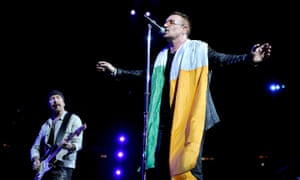
They have their home-town fans, of course. U2’s upcoming show at the 73,500 capacity Croke Park stadium is sold out. But to huge sections of the Irish population, Bono is about as welcome as cold sores and spam email. How can that be?
Many of the patrons of Grogans pub â€" a mid-sized bar in the centre of Dublin you could reasonably pitch to tourists as authentically Irish â€" share a distaste for U2. Not all can source the root of their feelings, but there’s one thing most do agree on: it doesn’t simply come down to the echoing guitar riffs or grandiose gesturing of their music.
“I think it’s quite an accomplishment for Bono. He does so much for charity and the poor and yet people still do hate him,†says 24-year-old Karl Downey. “I don’t really like him. Maybe it’s because he’s a bit sanctimonious. It might be the glasses as well. He never takes off those glasses.†(Bono gets a pass on the shades when Downey’s friends point out that the singer wears them because he suffers from glaucoma.)
“We don’t like them because they did well,†adds Karl Devereux. “They’re not the Dubliners, the Pogues, even the Cranberries â€" they all weren’t that big. But U2 did very well.â€
At another table, one patron expands on the point that the band’s huge success might have worked against them by telling the well-worn tale of two men looking up at a big house on a hill. The first man vows that one day he’ll live in a home that’s just as opulent. The second, from Ireland, curses the owner and pledges that one day he’ll wring their neck. At it happens, Bono himself recounted this fable in a 2005 interview with Conan O’Brien.

In other words, the nation’s dislike of U2 is classic Irish begrudgery â€" the phenomenon that Irish people are predisposed to feel envy and resentment towards those who achieve a certain level of success. Harry Browne, author of The Frontman: Bono (In the Name of Power), believes this theory has some credence. “[There is] a pride in being in the position to take this large object and cut it down to size, which I think is a very Irish, post-colonial phenomenon,†he explains. “I think that’s a big aspect of it.â€
The idea of Irish begrudgery is difficult to gauge. Liam Neeson, Saoirse Ronan and Conor McGregor enjoy all the glitzy spoils of being famous but have escaped the same backlash. In rock history, artists such as Thin Lizzy and Rory Gallagher are widely beloved among their countrymen. A statue of Lizzy frontman Phil Lynott stands on Dublin’s Harry Street; there are sculptures and plaques dedicated to Gallagher dotted throughout the island at which fans can bend the knee. If begrudgery plays a part in U2’s unpopularity, it’s uniquely barbed when it comes to the band.
Bono believes some of the Irish vitriol can be traced back to the band’s opposition to Noraid, an organisation that funded the IRA during the Troubles. Some cast-iron republicans can point to U2’s ties to British establishment figures â€" plus Bono’s own honorary knighthood â€" and call treachery, but in 2017, they’re a small sect.
No, it’s another issue that really dogs the band: their tax arrangements. In 2006, U2 moved part of their business to the Netherlands, where the tax rate on royalty earnings is more favourable for artists. When you operate on U2’s financial scale, this is a major detail. Ireland was scalded by the global 2008 financial crash; communities were eroded by austerity, while the band’s reputation as “tax dodgers†persisted. As People Before Profit party TD BrÃd Smith says: “Bono is seen as part of that cohort of very wealthy people who avoid paying tax in this country but enjoy the fruits of being of this country.â€
Smith adds: “There’s a huge [number of people] that just see U2, and Bono in particular, as hypocrites, because their tax arrangements are deliberately structured â€" and he makes no bones about this â€" so that they don’t pay [as many] taxes.â€
The question follows the band like a long shadow. There are no hard figures to look at, but U2 have consistently denied their tax setup is in any way immoral. “It is just some smart people we have working for us trying to be sensible about the way we are taxed,†Bono told Sky News in 2015. “We pay a fortune in tax, a fortune, just so people know, and we’re happy to pay a fortune in tax.â€
But the core of the Irish public’s contempt for U2 involves some of Bono’s activities outside of the band. On paper, his over 30-year record as a humanitarian is impressive: raising Aids awareness, lobbying for third-world debt relief and founding international advocacy organisation The ONE Campaign. Almost no one would deny that Bono genuinely cares about Earth’s human suffering and wants to leverage his cultural standing to help eradicate it.
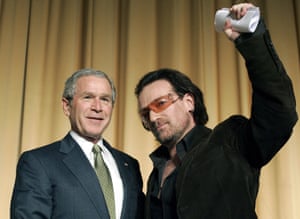
To some, though, there’s a hypocrisy to the samaritan who avoids the taxman, aligns himself with corporations like Apple, which is itself fighting a legal battle against paying back taxes in Ireland, and dines with George W Bush and Tony Blair. To others, there’s just something about Bono’s perceived self-righteousness that rubs them up the wrong way.
Browne’s book pitches Bono as a symbol of western exploitation. He points to the singer’s close relationships with Bush and Blair as something that grates on the Irish public. “That’s definitely the source of some of the problems that people here have with them,†he says. “The way in which [Bono’s] undoubtedly genuine concerns for the poor end up playing to neoliberal exploitation and imperial war making.â€
“There is a difference between cosying up to power and being close to power,†asserted Bono in an interview with the Observer covering his activism in 2013. When it comes to the Dublin natives, though, it’ll take a lot to shift Irish people from their entrenched positions. This fractured bond with their countrymen is a thorn firmly planted in the band’s ribcage. It can’t be pulled out by a soaring chorus or pretty ballad.
0 Response to "Where the streets have no statues: why do the Irish hate U2? | Music"
Posting Komentar