
Iran Criticism of Afghan Dam Projects Draws Rebuke From Kabul Officials
Afghan officials reacted strongly to recent remarks by Iranian President Hassan Rouhani concerning water management and irrigation projects in Afghanistan.
Speaking at an international conference on sandstorms and environmental issues Monday in Tehran, Rouhani criticized the Afghan government’s dam projects, which are part of several economic and development initiatives recently begun in Afghanistan.
“We cannot remain indifferent to the issue [water dams] which is apparently damaging our environment,†Rouhani said. “Construction of several dams in Afghanistan, such as Kajaki, Kamal Khan, Salma and others in the north and south of Afghanistan, affect our Khorasan and Sistan-Baluchistan provinces.â€
Allegation of interference
Afghan lawmakers charged that Rouhani’s remarks amount to clear and deliberate interference in Afghanistan’s affairs and undermines the country’s sovereignty.
“The House of Representatives will not remain indifferent towards Rouhani’s remarks,†said lawmaker Abdul Qader Qalatwal, who represents southern Zabul province.
“We maintain the right to have irrigation and power dams in Afghanistan,†Kiramuddin Rezazada, another outraged Afghan lawmaker, added.
The Afghan government has recently launched several economic and water management projects across the country, sparking reactions from neighboring countries, particularly Iran.
​Water-sharing treaty
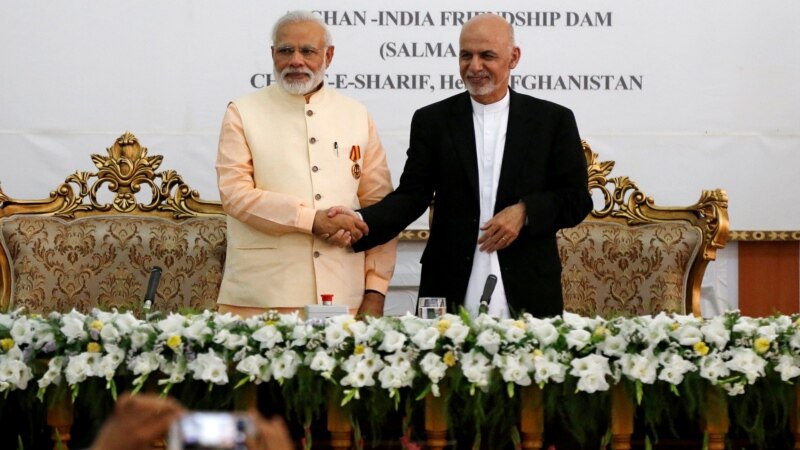
Iranian authorities have been seeking a larger share of water supplies from Afghanistan. It has voiced concerns that an Indian-funded hydroelectric and irrigation dam called Salma in western Herat province may reduce the flow of water into Iran.
The two neighboring countries signed a water-sharing treaty in 1973 that says that Iran shall not make claims to water from the Helmand River in excess of the amount agreed upon in the treaty, “even if additional water†becomes available in the future.
Meanwhile Afghan President Ashraf Ghani has said that Iran continues to receive its fair share of water from Helmand River and that the country cannot claim more than what has been agreed upon.
“We want domestic production. … We will manage our water and control it,†Ghani said earlier this year.
Afghanistan currently imports electricity from several central Asian countries to meet the growing demand for electricity across the country.
Iran still receives more water
Afghanistan’s Ministry of Water and Power charged that Iran has received four times more water over the years than allocated to it in the water-sharing treaty between the two countries.
“For the last 40 years, there has been no development on Afghan rivers and water flowed to the neighboring countries without any restrictions,†Sher Jan Ahmadzai, director of the Center for Afghanistan Studies at the University of Nebraska-Omaha, told VOA. For decades “there was no oversight of the amount of water that was supposed to flow to Iran, thus Iran receives more water than what was agreed in the treaty of 1973,†he added.
Wadir Safi, a professor of law and political science at Kabul University, echoes Ahmadzai’s analysis and adds that in defending its national interests, the Iranian government “goes to the extremes,†threatening and undermining regional security.
“If Iran is not satisfied with the amount of water it receives under the 1973 water-sharing treaty between the two countries, it should revert to international laws governing water resources,†Safi said.
Abdul Basir Azimi, Afghanistan’s deputy minister of water and power, said two-thirds of the Afghan water flows to neighboring countries.
“Our economic and development initiatives are a good opportunity for regional cooperation as well. If neighboring countries really believe in an independent and prosperous Afghanistan, they should welcome our initiatives. A prosperous Afghanistan can be a better neighbor,†Azimi said.
He added that the ongoing irrigation and development projects in Afghanistan are aimed at providing employment to Afghan youths who are vulnerable to extremists’ recruiters, and that it will discourage the widespread poppy cultivation in the country.
Iran’s support for insurgents
Afghan officials have previously accused Iran of attempts to sabotage dam projects in Afghanistan by supporting the Taliban and providing them with sophisticated weapons.
In late 2016, Asif Nang, former governor of Farah province, which shares a border with Iran, accused Tehran of harboring Taliban fighters from Afghanistan in cross-border areas.
U.S. General John Nicholson, leader of NATO’s Resolute Support Afghan mission, also said in December of last year that Taliban connections to Iran and Russia were not advancing the cause of stability in the region.
In January of this year, Afghan governors in southern and western provinces accused Iran of using its close relationship with the Afghan Taliban to target power and water projects to safeguard Iranian interests.
“Iran is seeking to undermine the development projects over the Helmand River so that it can continue receiving more water,†Hayatullah Hayat, governor of Southern Helmand province, told VOA, citing Afghan intelligence reports forwarded to the Afghan Palace and the country’s National Security Council.
Iran says its contacts with the Afghan Taliban are aimed at helping the country’s peace talks with the militant group, not instigating instability in the country.
Some analysts believe that Rouhani’s recent remarks are in the context of environmental protection.
“Serious public health challenges inside Iran have exacerbated over the past years and the dispute over Helmand River could have the potential to reshape Iran-Afghan relations and become a major source of tensions between the two countries,†Alex Vatanka, an analyst with the Middle East Institute who follows Iran told VOA.
VOA’s Mehdi Jedinia contributed to this report.
0 Response to "Iran Criticism of Afghan Dam Projects Draws Rebuke From Kabul Officials"
Posting Komentar